
Dr. Rachel J.C. Fu, Chair & Professor of Dept. of Tourism, Hospitality and Event | Director of the Eric Friedheim Tourism Institute at the University of Florida
“For destinations, losing a visitor for one season is a revenue problem. Losing that visitor’s travel habit is a market-share problem, and market share is much harder to win back.” –Dr. R. Fu
Canadians Are Still Traveling. Just Differently
The most important lesson from the 2025 Canadian travel data is not simply that fewer Canadians visited the United States. It is that Canadians continued to travel, and many chose to spend their tourism dollars elsewhere. Canadian-resident return trips from the United States declined 25.4% in 2025, while overseas travel increased. Statistics Canada also found that increases in Canadian domestic and overseas travel almost entirely offset the reduction in U.S. visits.
For the U.S. tourism industry, this distinction is critical. This is not simply lost demand. It is demand being redirected to competing destinations. What may have begun as a reaction to political tensions, tariffs, exchange-rate concerns or changing perceptions of the United States increasingly looks like something more consequential: a potential change in travel behavior and destination preference.
From Temporary Decline to Changing Travel Habits
The duration of the downturn deserves attention. Statistics Canada reported an 11-month streak of year-over-year declines in Canadian return trips from the United States, excluding the pandemic period, the deepest and most sustained decline on record. Early 2026 data also continued to show substantially depressed U.S. return crossings.
In tourism, there is a significant difference between a traveler saying, “I will postpone my U.S. vacation this year,” and saying, “I discovered another destination I prefer.” The first creates a temporary revenue loss. The second creates a market-share challenge. Once travelers develop new vacation routines, discover new destinations, join new loyalty programs and recommend those experiences to friends and family, winning them back becomes considerably more difficult.
Leisure Travel Is the Most Vulnerable
Leisure travel is highly substitutable. A Canadian traveler seeking sunshine, beaches, shopping, entertainment or culture can choose Florida, California, Arizona or New York, but can also choose Mexico, the Caribbean, Europe, Asia or destinations within Canada. Visiting friends and relatives is different. Relationships determine the destination. A traveler whose daughter lives in Florida cannot simply substitute Spain for that family visit. The numbers demonstrate this distinction. Canadian leisure visits to the United States declined 21.5%, representing approximately 3.2 million visits, while visits to friends and relatives declined only 9%.
The economic implications are even greater. Canadians traveling abroad primarily for leisure spent approximately 4.5 times as much as family-related travelers, according to Statistics Canada. Losing a leisure traveler therefore affects far more than hotel occupancy. The impact flows through restaurants, vacation rentals, attractions, theme parks, airlines, rental cars, retail, golf, cruises and entertainment.
Florida and Other Tourism-Dependent Destinations Face Greater Exposure
Warm-weather destinations and border states are particularly exposed. Florida is an important example because Canadians have historically represented valuable winter visitors, seasonal residents, repeat vacationers and long-stay travelers. Border communities face another challenge. Same-day shopping, dining, gaming and short leisure trips can disappear quickly when consumer sentiment changes. Tourism operates through a powerful multiplier effect. When one Canadian household cancels or redirects a U.S. vacation, the lost spending is distributed across an entire visitor economy.
What Would a Genuine Recovery Look Like?
One or two stronger months should not be mistaken for recovery. Tourism fluctuates because of weather, exchange rates, school calendars, airline capacity, economic conditions and major events.
Four indicators should be watched together:
Visitor volume
Length of stay
Visitor spending
Purpose of travel, especially leisure
A genuine recovery would require several consecutive months of improving year-over-year Canadian visitation, accompanied by stronger leisure demand, longer stays and increased spending. We must also examine where Canadians travel instead. If U.S. visitation improves modestly while Canadian travelers continue disproportionately choosing Europe, Mexico, the Caribbean, Asia and domestic destinations, that represents stabilization, not necessarily recovery.
Tariffs Matter, but Tourism Is Also Emotional
Renewed tariff or political tensions could further complicate the recovery. Travel decisions are economic, but they are also deeply emotional. Tariffs may influence household purchasing power, exchange-rate expectations and perceptions of value. Political tensions can affect whether travelers feel welcomed, and whether they want to spend their discretionary vacation dollars in a particular destination.
Tourism recovery therefore requires more than competitive prices. It requires confidence, value and a genuine sense of welcome.
America Must Compete to Win Canadian Travelers Back
The United States retains tremendous competitive advantages: geographic proximity, strong air and road connectivity, world-class attractions, beaches, shopping, entertainment and longstanding family and business ties with Canada. But these advantages cannot be taken for granted. When Canadian travelers establish new relationships with Mexico, Europe, Asia, the Caribbean or destinations within Canada, airlines will add capacity, tour operators will develop packages, loyalty relationships will deepen and word-of-mouth recommendations will grow.
The strategic message from U.S. destinations therefore cannot simply be:
“Come back.”
It must become:
“Here is why America is worth choosing again.”
That requires rebuilding destination confidence, emphasizing value, communicating welcome, strengthening partnerships with Canadian airlines and travel intermediaries, and developing targeted strategies for different Canadian traveler segments.
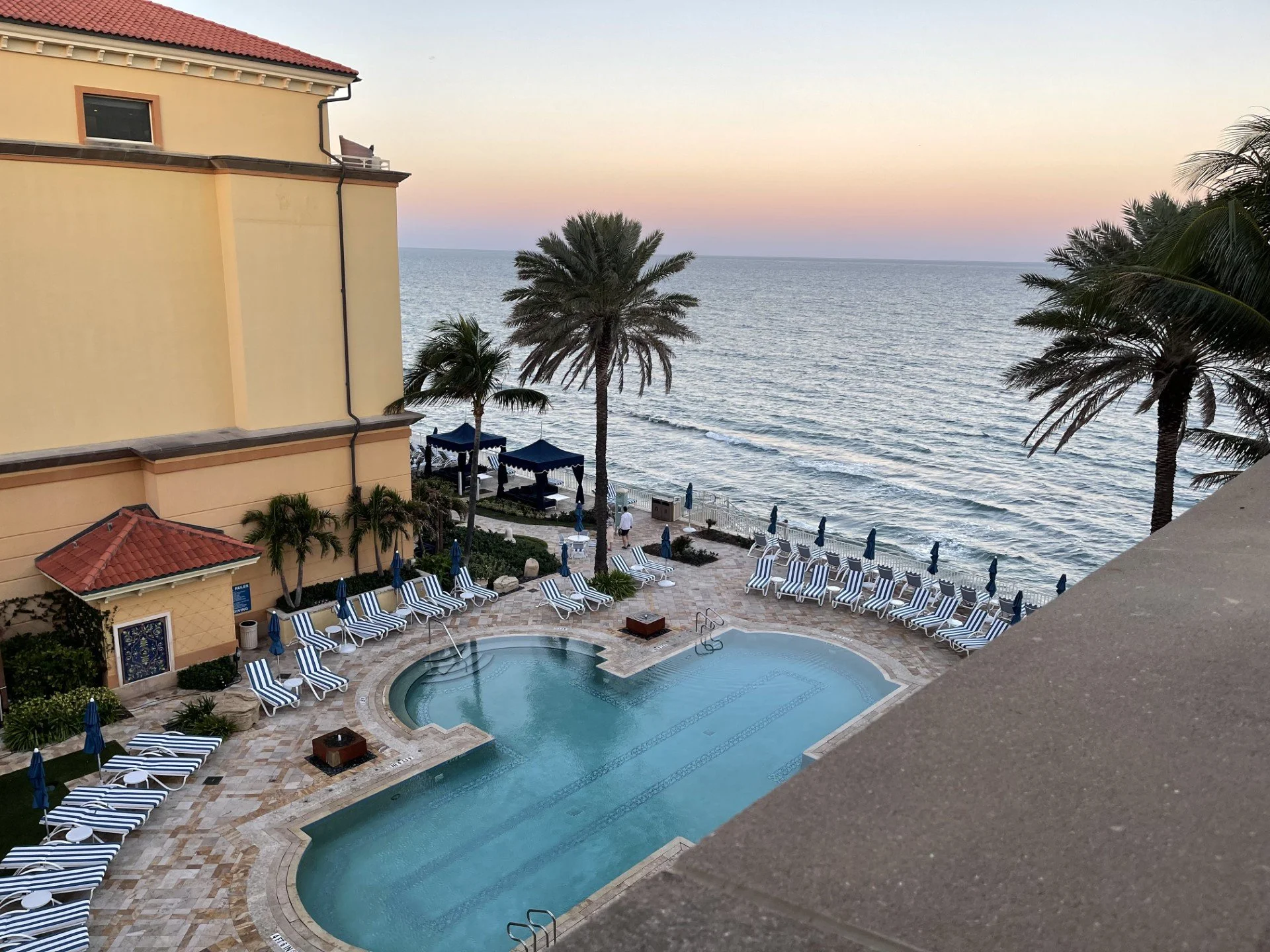
{Image Credit: Dr. Rachel J.C. Fu} Palm Beaches in Florida
