
Dr. Rachel J.C. Fu, Chair & Professor of Dept. of Tourism, Hospitality and Event | Director of the Eric Friedheim Tourism Institute at the University of Florida
“Play it cool, stay alert, and enjoy the moment. You came for the game. Let safety help you win the whole trip.” – Dr. R.J. Fu
Recent reports of violence linked to the Jalisco New Generation Cartel (CJNG) near Guadalajara have understandably raised concerns, because the city is scheduled to host matches during the upcoming FIFA World Cup. While the timing intensifies attention, history suggests that criminal violence and mega-sporting events do not follow a simple cause-and-effect relationship.
Mexico’s experience with organized crime is not new, and neither is the presence of cartel activity in states that serve as cultural, economic, and tourism hubs. Jalisco, like many regions, has long balanced global visibility with internal security challenges. What has changed in recent years is not merely the existence of violence, but the speed and scale at which it circulates through media ecosystems stripped of historical context. That amplification can make isolated or localized events appear as indicators of systemic collapse, even when they are not.
Looking globally, similar situations have played out repeatedly. Brazil hosted the World Cup and Olympics amid concerns over crime and political unrest; South Africa faced scrutiny before the 2010 World Cup due to violent crime rates; Russia hosted the 2018 World Cup despite geopolitical tensions; and France has repeatedly staged major sporting events while managing terrorism and social unrest. In each case, governments significantly reinforced security protocols, often with international coordination, and the events themselves proceeded without major disruptions tied directly to those fears.
It is also important to understand cartel behavior strategically. Groups such as CJNG are primarily focused on territorial control, logistics, and signaling power to rivals and the state not on undermining international sporting events that bring overwhelming security presence and global law-enforcement attention. Historically, criminal organizations tend to avoid actions that provoke unified state response or jeopardize long-term economic flows, including tourism and commerce that indirectly benefit regional economies.
From a governance standpoint, host cities for events like the World Cup typically undergo years of preparation that extend far beyond stadium readiness. These preparations include intelligence sharing, militarized policing strategies, surveillance upgrades, and coordinated emergency response planning. Guadalajara’s inclusion as a host city means it will be operating under an intensified security framework well before the first whistle is blown.
That said, acknowledging historical patterns does not mean minimizing real social challenges. Organized crime reflects deeper structural issues economic inequality, regional disparities, and global demand for illicit markets. Major sporting events do not solve these problems, but they can temporarily alter enforcement dynamics and spotlight state capacity.
While recent violence near Guadalajara is serious and deserves attention, history suggests it is unlikely to directly threaten the successful hosting of World Cup matches. Mega-events and criminal activity have coexisted before, and host governments typically respond by tightening control rather than retreating. The real story is not whether Guadalajara can host the World Cup, but how enduring social and security challenges continue to shape life long after the final match ends.
Attending a mega-sporting event as a tourist or supporter is electric: crowds buzzing, flags everywhere, vibes immaculate. Still, big fun works best with smart planning. Here are practical, no-nonsense safety tips to keep the experience memorable for the right reasons.
1. First, plan before you land. Research the host city, including transportation routes, safe neighborhoods, and emergency numbers. Save key addresses offline on your phone in case data drops. Register with your country’s embassy if that option is available—it’s old school, but it works.
2. Second, move like a local, not a target. Dress comfortably and avoid flashing valuables. Keep phones, wallets, and passports secured—crossbody bags with zippers beat back pockets every time. Carry only what you need for the day; the rest stays locked up.
3. Third, arrive early and leave smart. Mega-events mean congestion. Use official transport options recommended by organizers and follow crowd-control instructions. After matches, resist the urge to rush—crowd surges are more risky than the event itself. Patience is a safety skill.
4. Fourth, stick to verified information. Rely on official event apps, venue announcements, and trusted local news. Ignore rumors spreading on social media—panic travels faster than facts. If something feels off, trust your instincts and relocate calmly.
5. Fifth, hydrate, eat, and rest. Heat, alcohol, and long walking days can sneak up on you. Drink water regularly, pace alcohol consumption, and know where medical tents are located. Taking care of your body is part of staying safe.
6. Sixth, travel in pairs or groups when possible. There’s strength in numbers, especially at night. Share itineraries with someone back home and check in regularly.
Finally, respect local laws and culture. What’s normal at home may not fly abroad. Knowing basic customs and regulations helps you avoid unnecessary trouble.
In moments of heightened attention and uncertainty, perspective matters as much as preparation. History shows that mega-sporting events endure not because risks disappear, but because institutions, communities, and individuals adapt intelligently. For fans, the wisest approach is simple: stay informed, stay respectful, and let awareness, not fear, shape an experience meant to unite the world through sport.
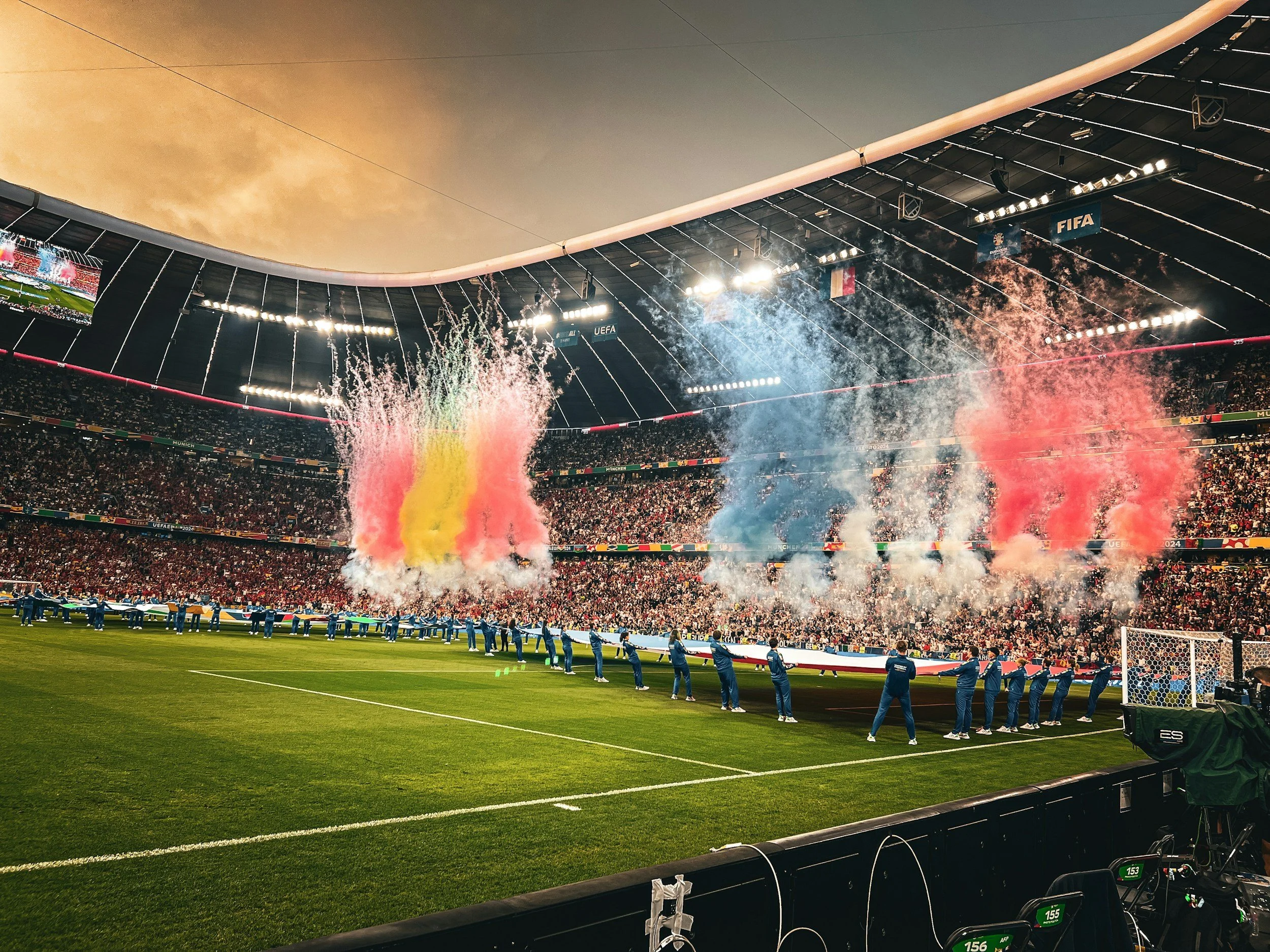
{Image Credit: @johnneshuebner} An opening celebration for a World Cup mega-event, held in a packed stadium
