
Dr. Rachel J.C. Fu, Chair & Professor of Dept. of Tourism, Hospitality and Event | Director of the Eric Friedheim Tourism Institute at the University of Florida
“Gold medals shine. But devotion? That’s the real brilliance. And it belongs to every athlete who dared to chase excellence, knowing exactly how unforgiving the stage can be.” – by R.F.
Watching the Olympics reminds us what inspiration really looks like: pressure, talent, invisible hard work, patience, and pain dressed up as glory. Being an Olympic gold medal holder isn’t just about winning. It’s about surviving everything that tried to stop you long before the anthem ever played.
At the Olympic Games, gold appears shiny, elegant, almost effortless on television. One perfect routine. One flawless race. Gold is not a performance. It’s a receipt for a life spent choosing the difficult path, every single day.
Skill is the obvious part. You can see it. Measure it. Score it. Time it. But skill alone never creates a champion. At this level, everyone is skilled. Everyone is elite. What separates the gold medalist is precision under chaos. When the lights are blinding, the crowd is roaring, and history feels heavy, the champion finds flow. Where movement becomes instinct instead of calculation. That is artistry born from discipline.
And yes, artistry matters. Even in the most technical sports, there is beauty. A gymnast suspended in the air just a fraction longer than gravity allows. A skater carving the ice like it personally offended them. A runner whose stride looks less like effort and more like language. These moments don’t happen by accident. They are sculpted through years of refinement: tiny adjustments no one notices, yet everyone feels. Art at the Olympics isn’t decoration; it’s mastery made visible.
Flow is where champions live. Not forever, no one stays there, but long enough. Flow is fragile. One doubt can fracture it. One mistake can shatter it. Entering flow on the biggest stage in the world requires emotional control that borders on supernatural. Gold medalists aren’t fearless. They’re better at carrying fear without letting it drive. That kind of toughness can’t be measured.
Then there is the champion’s mindset. Gold medal holders compete against others, but mostly against themselves. Against past failures. Against expectations. Against that quiet voice asking, What if today isn’t the day? Champions show up anyway.
For the final winner (the one who earns the applause, the podium, the history books), there is joy. Also relief. Because no matter how much preparation goes in, the margin between gold and not-gold is terrifyingly thin. Hundredths of a second. A tenth of a point. A landing that’s just a little cleaner. Greatness at this level is fragile, and that fragility is what makes it sacred.
But here’s the part we don’t talk about enough: the athlete who almost stepped onto the top of the stage. The silver medalist. The fourth-place finisher. The one who did everything right and still came up short. The complexity of that experience is beyond what we know. Imagine dedicating your entire life to a single moment and arriving just a breath away. That isn’t failure. That’s excellence colliding with heartbreak. That’s pride wrestling disappointment. That’s being among the best in the world while feeling invisible to history.
Those athletes carry a different kind of toughness. The toughness to keep loving the sport when it doesn’t love you back. The toughness to applaud the winner while swallowing disappointment. The toughness to redefine success in a world obsessed with first place. If gold medalists are forged in fire, those who miss the top step are forged in silence.
I admire all of them. Every athlete who devoted their life, their body, and their talent to a performance measured in seconds or judged in stillness. I admire the sacrifices we never see: the missed birthdays, the postponed normal lives, the courage it takes to risk everything in front of the world.
Being a champion audience matters more than we admit, because the spirit of the Olympic Games doesn’t live only on the podium. It lives in the stands, in the applause given freely to every contestant. True championship support means watching with admiration for the talent, excitement for the moment, respect for the journey, and understanding of the sacrifice behind every performance. It means cheering not just for gold, but for courage, effort, and resilience. When audiences honor every athlete—winner or not—they become part of the legacy, lifting competitors higher with their energy and humanity. That kind of support reminds the world that excellence deserves recognition, dedication deserves respect, and the future of sport is brighter when appreciation is shared, loud, and generous.
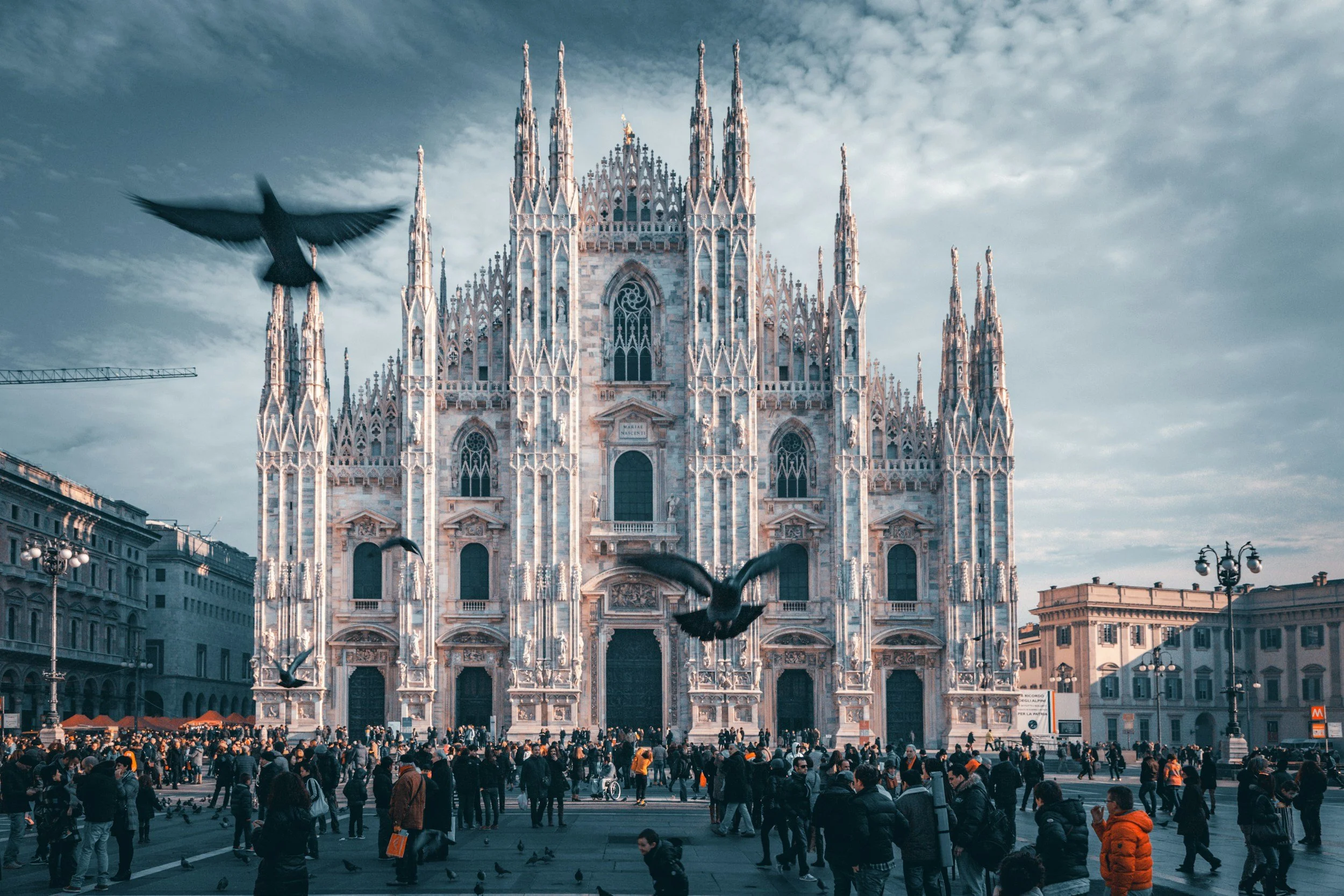
{Image Credit: @Sean_ca} People gathering at the Duomo di Milano plaza, Italy.
