
Dr. Rachel J.C. Fu, Chair & Professor of Dept. of Tourism, Hospitality and Event | Director of the Eric Friedheim Tourism Institute at the University of Florida
“Space education may close that gap fast. Inspiration is what drives persistence. Persistence is what builds future leaders.” - by Dr. R. Fu
Opening the Sky as a Classroom
Education that doesn’t spark curiosity is already losing. The next generation isn’t wired for passive learning; they’re wired for experience. Space, once distant and abstract, is now stepping into reach through commercial innovation and immersive design. This is not just a technological shift. It’s an educational opportunity hiding in plain sight. Space tourism and themed space environments are no longer separate conversations. They form a powerful, scalable ecosystem that can reshape how K–16 students learn, feel, and envision their futures. Done right, this isn’t enrichment. It’s transformation.
From Curiosity to Calling: Why SPACE Changes Everything
There’s something about space that hits differently. It humbles you, excites you, and . . makes everything on Earth feel both small and meaningful at the same time. For K–16 students, that emotional response is not a side effect; it’s the engine. When students are exposed to space through real missions or immersive simulations. They don’t just learn science. They experience it. Once learning becomes emotional, it becomes durable. This is where traditional education has always had a gap. It informs, but it doesn’t always inspire. Space education may close that gap fast. Inspiration is what drives persistence. Persistence is what builds future leaders.
Space Tourism: Turning Imagination into Possibility
Space tourism isn’t built for school field trips. It’s expensive, exclusive, and still finding its footing. But dismissing it would be short-sighted. Historically, every major innovation starts at the top and scales down. Aviation did it. Computing did it. Space will too. The real value of space tourism lies in its signal. When civilians, not just astronauts, begin traveling to space, it changes the narrative. Space becomes less mythical and more attainable.
For students, that shift matters more than we give it credit for. It tells them:
You don’t have to be perfect to be part of space
There are roles beyond being an astronaut
The future space economy needs dreamers, thinkers, creators, leaders, doers, not just scientists.
If leveraged properly, space tourism becomes a storytelling engine for education such as feeding classrooms with real missions, real data, and real human experiences. With that translation into learning, it becomes a catalyst.
Themed Space Experiences: Scalable Inspiration That Works
Not every student can go to space, but every student can experience it. Themed space environments including immersive exhibits, simulations, and interactive attractions are the real bridge between access and aspiration. They take the awe of space and package it into something tangible, repeatable, and educational. And let’s not overlook what makes them effective:
They blend learning with emotion
They encourage active participation, not passive observation
They create shared experiences that students talk about long after
This is not replacing the classroom. It’s upgrading it. A well-designed space-themed experience does something a lecture cannot: it places the student inside the story. They are not learning about a mission; they are part of it.
Well-Being: The Hidden Power of Space-Inspired Learning
Simulated exposure to space can trigger awe: the same psychological response astronauts describe when viewing Earth from orbit. That sense of awe has measurable effects:
It reduces stress and mental fatigue
It increases openness and curiosity
It strengthens a sense of purpose and connection
It resets the mind. And in a K–16 setting, that’s not a luxury. It’s a necessity. If education is about developing the whole student, then space-inspired experiences are not optional add-ons. They are tools for building resilience, imagination, and emotional balance.
Designing the Pipeline: From First Spark to Future Career
Stop treating space tourism and themed experiences as isolated events. Start building a pipeline. A student’s journey may look something like this:
Early exposure: immersive themed experiences spark curiosity
Structured learning: classroom integration builds knowledge
Real-world connection: exposure to space missions and tourism creates aspiration
That’s how you move from interest to identity. This is where partnerships matter:
Schools aligning curriculum with experiential learning
Industry providing real-time data and mentorship
Institutions creating continuity across grade levels
No more one-off field trips. This is about building ecosystems.
Why Sponsors Should Pay Attention (And Step Up)
Investing in space-inspired K–16 education is not charity. It’s strategy. Sponsors gain:
Workforce development: early exposure builds future talent pipelines
Brand alignment with innovation: space is the ultimate forward-looking narrative
Community impact: measurable contributions to education and well-being
Sponsors become part of something bigger than a campaign, they become architects of the next generation. There is a clear opportunity here:
Fund immersive educational programs
Support access initiatives for underserved students
Partner with schools and institutions to co-create curriculum
Because the companies that invest in education today will not need to “find talent” tomorrow. They will have helped build it. The future space economy isn’t theoretical, it’s coming fast. It won’t just need engineers. It will need:
Designers of human-centered space environments
Leaders who understand global collaboration
Innovators who can bridge technology, health, human performance, space hospitality, and humanity
Final Perspective: Inspire First, Educate Always
At the end of the day, this isn’t complicated. We’ll raise a generation that looks at the stars and doesn’t just wonder. They rock.
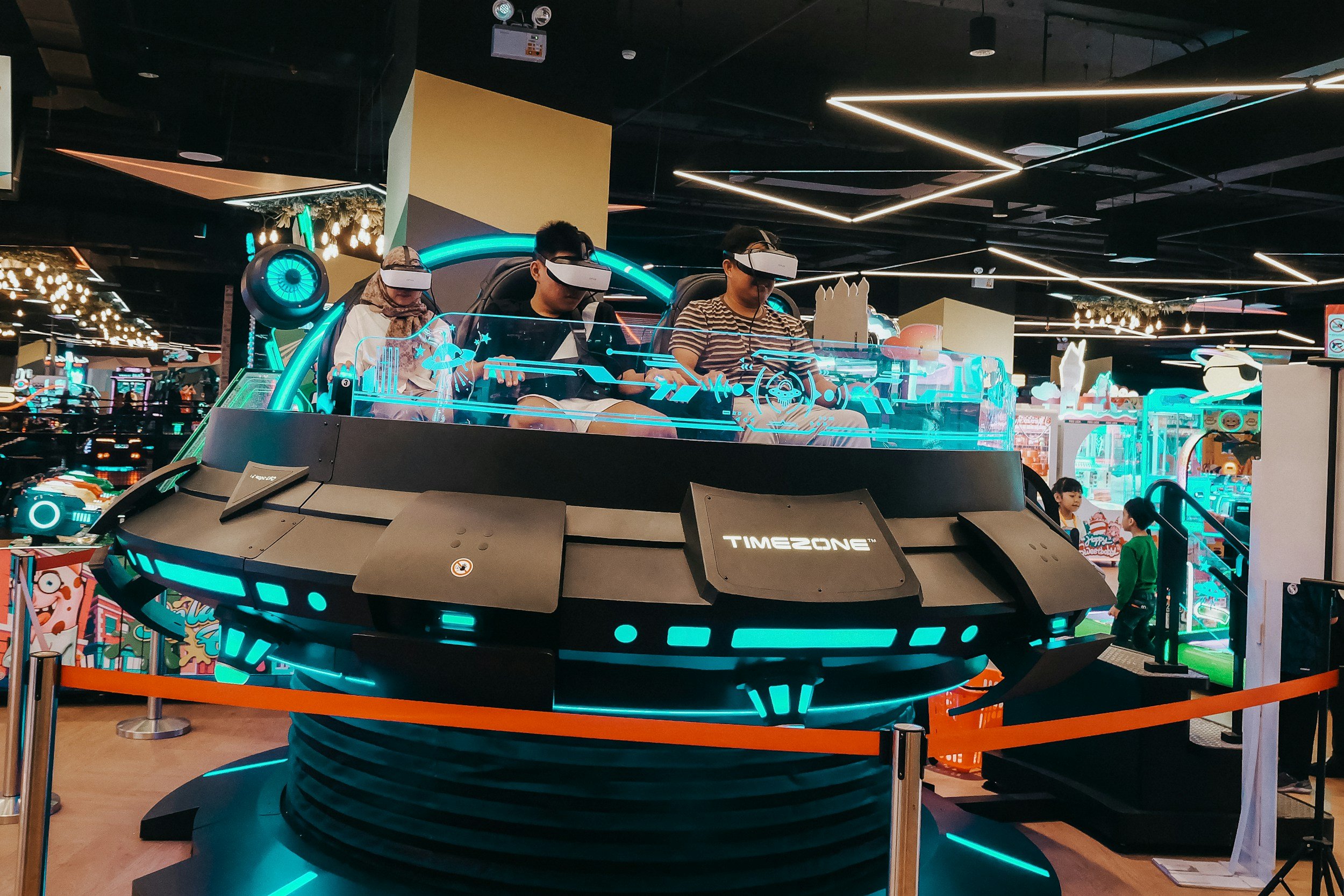
{Image Credit: @YugaSukamo} Children with a space-simulation ride
