
Dr. Rachel J.C. Fu, Chair & Professor of Dept. of Tourism, Hospitality and Event | Director of the Eric Friedheim Tourism Institute at the University of Florida
“The chefs who embrace this shift instead of fighting it are the ones who’ll stay ahead. Because the future isn’t about proving humans are better than machines. It’s about proving we’re smarter when we use them.” – by Dr. R. Fu
When Steel Meets Skill: Robot Chefs vs. Human Chefs
The recent coverage by the National Restaurant Association and reporting highlighted on WUFT-FM put a spotlight on a question the industry can’t dodge anymore: are robot chefs competitors or collaborators?
Human chefs and robotic systems were tasked with producing comparable dishes under controlled conditions: same ingredients, same time constraints, same expectations. What came out of it wasn’t a knockout victory on either side, but a very clear split in strengths.
Robotic chefs dominated in precision and consistency. Their dishes were uniform: same portion, same doneness, same plating every single time. No variation. In high-volume environments, that’s a dream scenario. Operators watching this weren’t thinking “cool tech” they were thinking “predictable margins.”
Human chefs, though, still owned creativity, adaptability, and sensory judgment. When conditions shifted such as slight ingredient differences, timing pressure, plating decisions: the humans adjusted instinctively. Robots followed programming. That’s a big difference. One improvises; the other executes.
Judges and observers noted something subtle but important: even when the robot-produced dish matched technical standards, the human-prepared dish often carried more character. Not always better but more expressive. In hospitality, that still counts.
The Real Outcome: Not a Win, but a Wake-Up Call
The takeaway wasn’t “robots beat chefs” or vice versa. It was this: some robots are good enough to handle a large portion of kitchen operations. If a machine can reliably produce 80–90% of menu items at scale, the role of the human chef shifts immediately. Less repetition, more oversight. Less execution, more design. It’s not replacement. It’s redistribution. Entry-level kitchen roles? Those are the most exposed. The industry has always been tough at that level, and automation isn’t here to make it gentler.
From Kitchens to Chessboards: A Familiar Story
If this dynamic feels familiar, it should. We’ve seen it before just not in kitchens. Back in 1997, Deep Blue (IBM supercomputer) defeated Garry Kasparov (world chess champion) in what became a defining moment in technology vs. human expertise. It wasn’t just about winning a match. It changed how people thought about intelligence, strategy, and competition. Machines didn’t just catch up. They surpassed humans in calculation, pattern recognition, and decision speed. But here’s the twist most people forget: chess didn’t die. It evolved. Today, the strongest form of chess isn’t human vs. machine. It’s human + machine, often called “centaur chess.” Players using AI assistance outperform both humans alone and computers alone in certain formats. Strategy meets computation. Instinct meets data. Sound familiar?
Hospitality’s “Centaur Moment”
The restaurant industry is heading toward its own version of that hybrid model. Robot chefs will handle: Precision cooking; repetitive prep; and high-volume execution. Human chefs will focus on: Concept development; flavor innovation; cultural storytelling; and guest experience. The smartest operators won’t pick sides. They’ll build systems where both thrive.
What Guests Will Notice (and What They Won’t)
Most guests won’t care how their fries were made as long as they’re hot, crispy, and fast. That’s where robots quietly win. But when it comes to signature dishes, tasting menus, or culturally rooted cuisine? Guests still lean toward human craftsmanship. Not because robots can’t cook but because they can’t care. People can feel that difference, even if they can’t explain it.
The Industry at a Crossroads
The robot vs. human chef narrative makes for great headlines, but it misses the bigger picture. This isn’t a battle. It’s a reshuffle. Robots are raising the baseline through forcing consistency, efficiency, and scalability across the industry. Human chefs are being pushed upward: toward creativity, leadership, and innovation. Hospitality has always balanced two forces: operational efficiency and human experience. One keeps the lights on; the other keeps guests coming back. Today, automation is reshaping that balance in a way the industry hasn’t seen since the rise of global hotel brands and quick-service chains. The difference now is speed. What once took decades is unfolding in a few short years. Automation is no longer a back-of-house upgrade. It is becoming the backbone of modern hospitality systems. From robotic fry stations to AI-powered reservation forecasting, the question is no longer whether to adopt automation, but how to do so without losing the essence of hospitality itself.
Already Here: The Quiet Takeover of Automation
Step into a contemporary restaurant or hotel, and automation is already working behind the scenes. Self-order kiosks streamline transactions. Smart kitchen systems monitor inventory and reduce waste. In hotels, contactless check-ins and mobile room controls have become standard expectations rather than premium features. These tools address long-standing operational challenges such as labor shortages, rising costs, and inconsistency in service delivery. Automation thrives in environments where repetition dominates. Tasks such as frying, grilling, and portioning are executed with machine-level precision, eliminating variability caused by fatigue or inexperience. The appeal is obvious. Machines do not call in sick, do not forget procedures, and do not deviate from standards. But efficiency alone does not define hospitality, and that tension is where the real story begins.
Big Data in the Kitchen: Recipes by Algorithm
Automation is not limited to execution; it is moving into creation. AI systems can analyze vast datasets, including customer preferences, regional tastes, seasonal ingredients, and nutritional trends. From this analysis, new recipes can be generated and optimized for both flavor and cost efficiency. A system might identify that certain flavor profiles resonate more strongly in specific regions and adjust menu offerings accordingly. While this approach enhances innovation, it does not replace human creativity. Data can suggest combinations, but chefs interpret and refine them. The future of culinary development will likely be collaborative, blending analytical insight with human intuition.
Training the Machine: From Minutes to Mastery
Training a human chef requires years of education and experience. Training a robot can begin in minutes, with basic programming, and extend to years as machine learning systems refine performance. The key difference lies in replication. Once a robot is trained, its knowledge can be distributed instantly across multiple locations. Human expertise, by contrast, remains individual and limited in scale. This shift fundamentally changes how knowledge is transferred within the industry. High-skilled professionals who can integrate technology, create unique dining experiences, and lead hybrid operations will likely see their value increase. The industry is shifting toward a model where top talent becomes more valuable, while routine roles diminish.
Tradition Under Pressure: The Cultural Question
Automation struggles with tradition. Many recipes are not written in precise measurements but passed down through experience and intuition. Instructions such as “cook until it smells right” cannot be easily translated into code. Human chefs remain essential in preserving these cultural elements. They carry the stories, techniques, and emotional connections that define cuisine. The risk of over-automation is a loss of identity. Without careful balance, food could become efficient but indistinguishable, sacrificing the diversity that makes dining meaningful.
The Taste Gap: When Machines Can’t Taste
A fundamental limitation of automation is its inability to taste. Robots rely on sensors and programmed parameters rather than sensory experience. Developers are exploring solutions such as electronic taste sensors and AI models trained on human feedback. These technologies can approximate flavor profiles but do not fully replicate human perception. For now, the most effective approach remains a partnership: machines execute tasks with precision, while humans evaluate and refine outcomes. Automation will continue to reshape restaurants businesses. It will improve efficiency, stabilize operations, and enable growth. But it will not replace the core of hospitality. Guests do not remember systems. They remember experiences. They remember how a meal made them feel, how a space welcomed them, and how a person connected with them. Machines can enhance the system, but they cannot replace the soul.
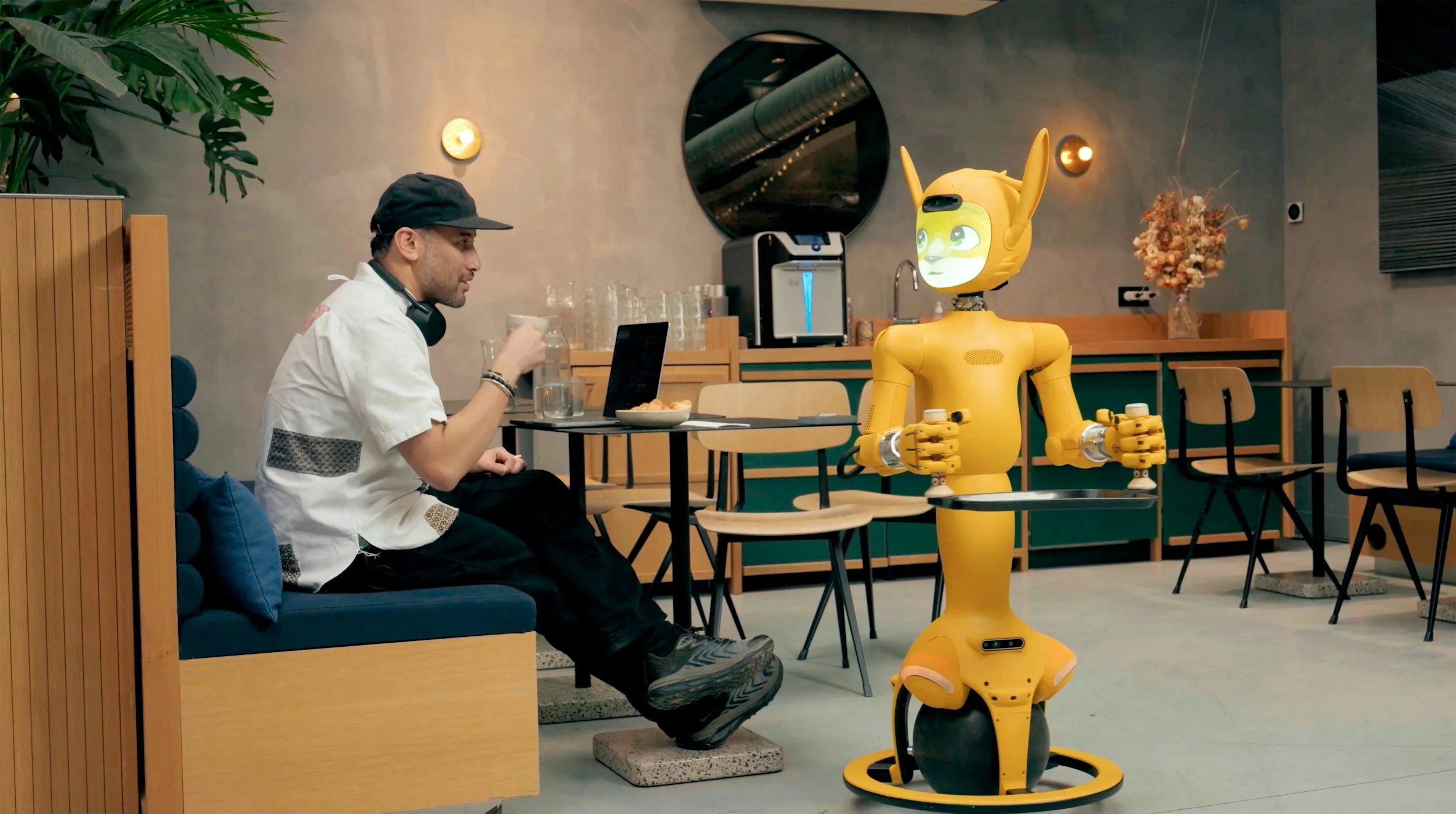
{Image Credit: @enchantedtools} a man with a service robot
